
If you’ve been using Nest Protects, you already know the bad news. Google discontinued them. After a decade of being the gold standard, the Nest Protect is gone.
Search results are full of desperate people looking for alternatives. One Reddit thread from March 2026 shows 24 votes and 42 comments from people asking what to do now.
Many have Nest Protects that are expiring. No clear replacement. I feel for them. I really do.
Google partnered with First Alert for the official successor. But the alternatives landscape is complicated.
After reading through hundreds of reviews and forum posts, here’s what actually works in 2026.
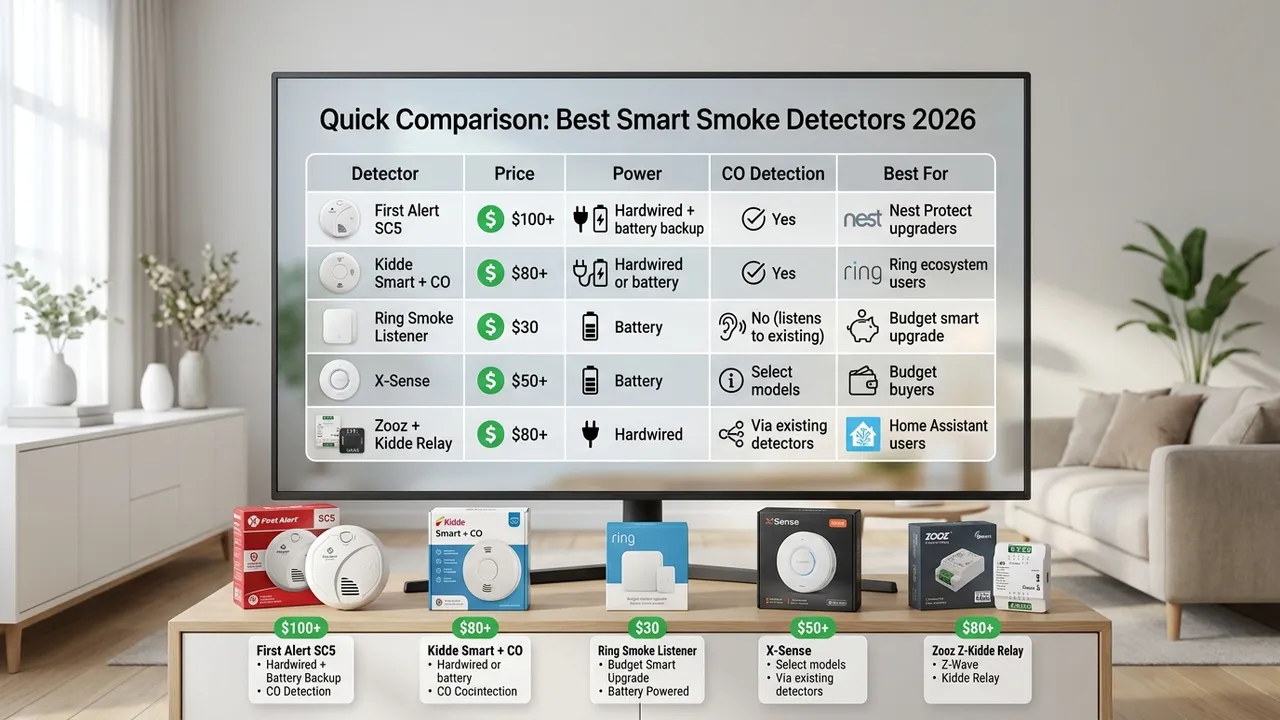
Quick Comparison: Best Smart Smoke Detectors 2026
| Detector | Price | Power | CO Detection | Best For |
|---|---|---|---|---|
| First Alert SC5 | $100+ | Hardwired + battery backup | Yes | Nest Protect upgraders |
| Kidde Smart + CO | $80+ | Hardwired or battery | Yes | Ring ecosystem users |
| Ring Smoke Listener | $30 | Battery | No (listens to existing) | Budget smart upgrade |
| X-Sense | $50+ | Battery | Select models | Budget buyers |
| Zooz + Kidde Relay | $80+ | Hardwired | Via existing detectors | Home Assistant users |
Top 5 Best Smart Smoke Detectors in 2026
1. First Alert SC5 Smart Smoke and Carbon Monoxide Alarm
The First Alert SC5 is the official Nest Protect replacement. It works with the First Alert app and Google Home.
According to Home Monitoring Advisor’s Nest Protect alternatives guide,
“the SC5 uses the same mounting bracket as Nest Protect, simplifying installation for anyone swapping out an existing unit.”
That matters if you’re replacing Nest Protects. The wiring harness swaps directly. Setup is straightforward through the First Alert app or Google Home.
The SC5 has Precision Detection technology. It can tell the difference between steam and actual smoke better than older models.
Hardwired with battery backup. One trigger sets off all interconnected alarms in your home. The app lets you silence false alarms remotely.
One catch: some users report that First Alert batteries die at 75-80% capacity. The detector chirps even though the battery still works in other devices.
2. Kidde Smart Smoke + Carbon Monoxide Alarm
Wirecutter’s top pick for 2026 is the Kidde Smart Smoke + Carbon Monoxide Alarm. It works with the Ring app.
If you already have Ring cameras or doorbells, your smoke detectors fit right into that ecosystem. No new apps. No new accounts.
Like Nest Protect, it uses voice warnings to alert you of fire or carbon monoxide instead of just beeping. The voice tells you which room the danger is in.
That context matters when you’re half asleep at 2 AM. “Smoke detected, bedroom” beats “BEEP BEEP BEEP” every time.
Setup is straightforward. The app doesn’t lag like some competitors.
Kidde offers both hardwired and battery versions. The hardwired version can interconnect with your existing Kidde detectors.
The Kidde detectors use photoelectric sensors. Better for cooking fires.
3. Ring Alarm Smoke and CO Listener
Here’s a different approach. Instead of replacing all your detectors, you can add a Ring Smoke and CO Listener.
It listens for your existing dumb detectors. When it hears the alarm pattern, it sends you a notification. Simple but effective.
This is the cheapest smart option if you’ve already got working detectors. You don’t need to rewire anything. Just mount the listener near your existing detector and pair it with the Ring app.
The limitation: it can’t silence your detectors. It can only tell you when they’re going off. But at $30 per listener vs $100+ for a full smart detector, it’s a solid compromise.
For basic notification needs, this is all most people need.
4. X-Sense Smart Smoke and CO Detector
X-Sense has been gaining popularity as a budget option.
The app is basic but functional. You get push notifications when alarms trigger.
Some models include CO detection. Others are smoke-only. Read the specs carefully before buying.
X-Sense customer service response times are slow. That’s a risk for a safety device.
Use X-Sense if budget is tight. But understand the tradeoffs. A delayed response from support on a malfunctioning smoke detector is not ideal.
5. Smartthings Smoke Detector with Zooz ZEN55 Relay
For Home Assistant and SmartThings users, this is the workaround many have settled on.
You get hardwired Kidde or First Alert detectors. They interconnect like normal. At the end of the circuit, you add a Zooz ZEN55 relay.
The ZEN55 monitors the electrical signal from your interconnected detectors. When one goes off, the relay triggers a SmartThings automation. You get a notification.
From there, you can set up automations to turn on lights, unlock doors, or whatever you need.
This approach keeps the reliability of hardwired detectors while adding smart home flexibility. The downside is complexity. This isn’t a plug-and-play solution.
The Truth About Smart Detector Problems
Let’s be real for a second. Smart smoke detectors have real issues. Before you buy, know what you’re getting into.
False Alarms
The biggest complaint is false alarms. Cooking toast triggers ionization detectors. Steam from showers triggers photoelectric ones.
First Alert’s SC5 has a feature that won’t let you silence it if it detects heavy smoke. That’s good. But it also means some false alarms require you to physically fan the detector until it resets.
Connectivity Drops
Z-Wave devices go offline. It’s just a fact of smart home life. If your detector is offline, you won’t get push alerts.
Hardwired detectors with battery backup are more reliable than pure battery Wi-Fi detectors.
Compatibility Nightmares
Some detectors don’t work with some platforms. If you’re deep in a specific ecosystem, your options are limited.
Check your smart home platform before buying. Not all detectors work with Home Assistant, SmartThings, Apple HomeKit, or Google Home equally.
Do You Still Need a Dumb Detector?
Wired’s recent analysis makes an important point:
“Most smart smoke detectors exclude one of two sensors to alert you about a fire.”
Some only have ionization sensors. Some only have photoelectric sensors. Most traditional detectors have both.
This is a real trade-off. You’re getting smart features but potentially losing detection capability.
The solution: use smart detectors for notification and remote monitoring. Keep some interconnected hardwired dumb detectors for backup.
They don’t need Wi-Fi or batteries to scream when there’s actual fire.
The Bottom Line
After reading everything, here’s my honest take on smart smoke detectors in 2026.
Best overall? Go with the First Alert SC5 if you’re replacing Nest Protects. Same mounting bracket, similar app experience, and it works with Google Home.
Best for Ring users? The Kidde Smart Smoke + CO detector connects to the Ring app and has voice alerts like Nest did.
Best budget? Add a Ring Smoke Listener to your existing detectors for $30 and get push notifications without replacing anything.
Best for Home Assistant? Hardwired Kidde detectors with a Zooz ZEN55 relay. Reliable and flexible.
Whatever you choose, the smartest thing you can do is have working detectors. Dumb or smart, tested or untested, get them on your ceiling. Then upgrade when you can.
Your home and everyone in it will thank you.
