
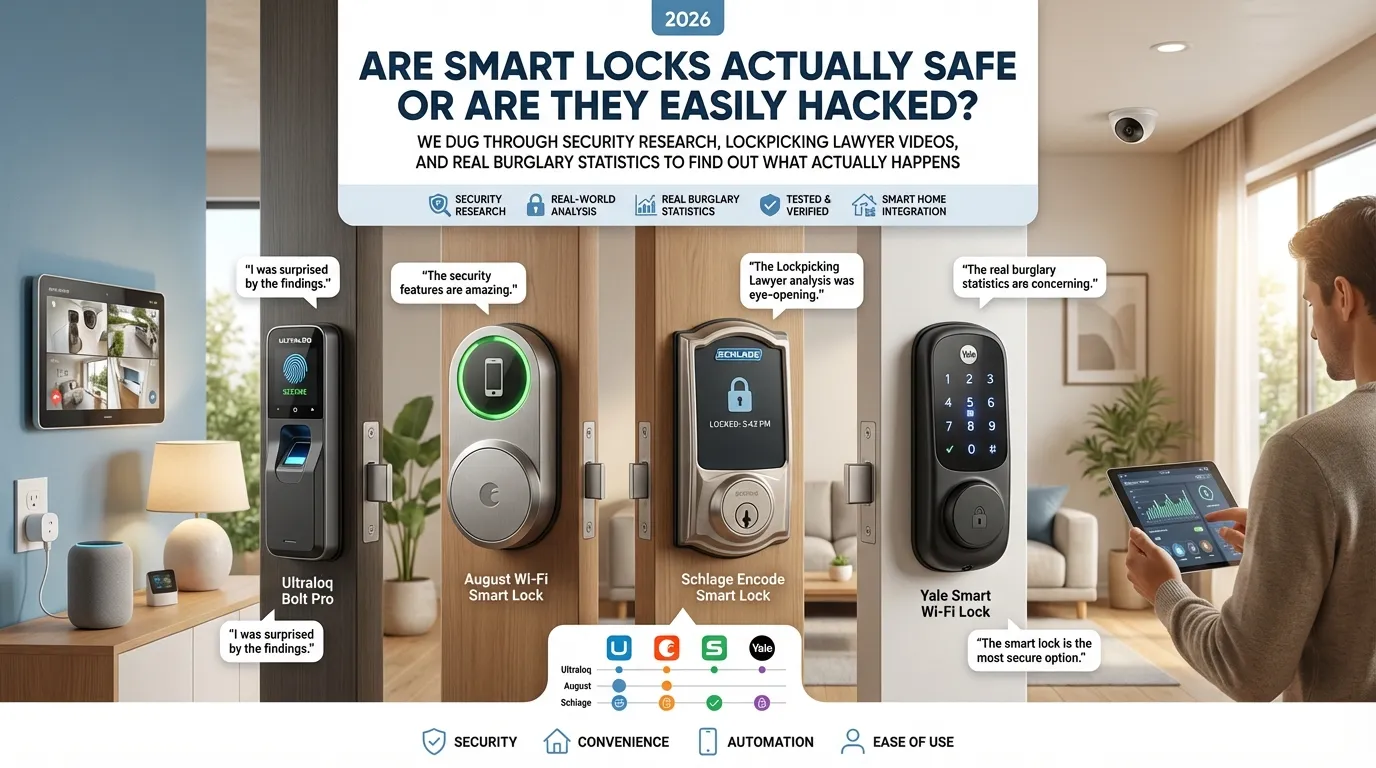
You hear it all the time. “Smart locks are easily hacked.” “A thief can break in with a magnet.” “Just use a regular lock.”
But what’s actually true?
I spent hours digging through security research, Lockpicking Lawyer videos, and real break-in reports. Here’s what I found.
The Headlines Look Scary
Lockpicking Lawyer, a security expert with millions of followers, has shown dozens of smart locks that can be opened in seconds.
Some with a strong magnet. Some with a simple tool. Some with nothing more than a paperclip.
One Reddit user put it bluntly:
“A lot of smart locks can be ‘hacked’ literally in a second with a strong magnet or a paperclip. Lockpicking Lawyer made lots of videos about it.”
A cybersecurity researcher demonstrated a CVE vulnerability in smart locks via Bluetooth Low Energy (BLE). A hacker within range could exploit it. That sounds terrifying. But let’s dig deeper.
What the Statistics Actually Say
A burglary happens every 51 seconds in the US. That’s from official US statistics.
But here’s the thing: most burglars don’t hack locks. They kick doors in. They break windows. They look for easy targets.
The Market.us report found that 90% of respondents said security level was “very important” when choosing a smart lock. Only 1% said it was unimportant.
According to The Zebra, residential burglaries dropped 19% in the first half of 2025. Home security awareness is growing. Smart locks are part of that conversation.
What Security Experts Actually Say
The Wall Street Journal brought in lock security expert Marc Tobias to test the Google Nest x Yale Lock. His findings? The hardware was solid. The real risks were elsewhere.
One Reddit user summarized it well:
“Smart locks do not increase the level of security of any entryway. They allow convenience.”
Another user who tested both said:
“Any lock is only as secure as its weakest link. Adding more options for entry lowers the security.”
But before you rip out your smart lock, consider this: traditional locks have the same physical vulnerabilities.
A standard deadbolt can be picked or bumped. Most break-ins through doors don’t involve picking at all. They involve force.
The Real Security Comparison
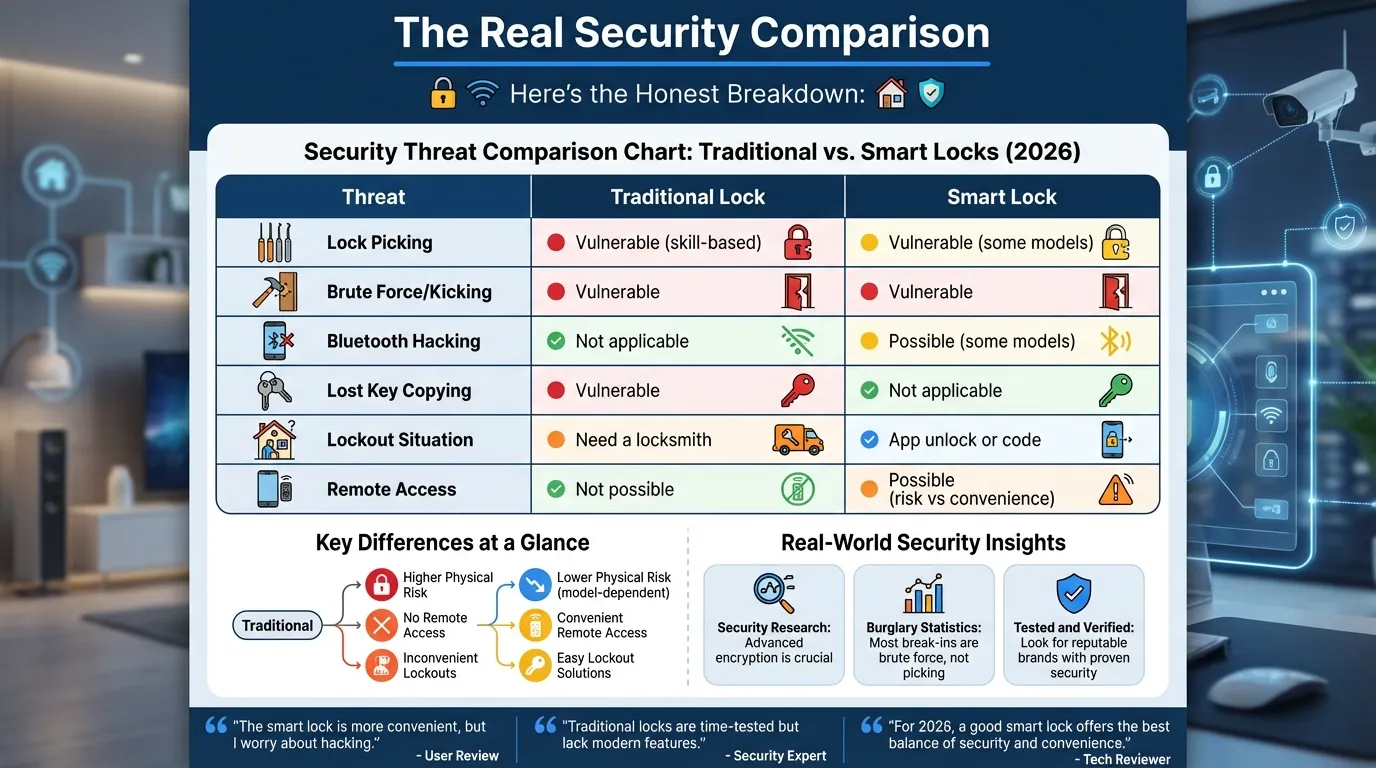
Here’s the honest breakdown:
| Threat | Traditional Lock | Smart Lock |
|---|---|---|
| Lock picking | Vulnerable (skill-based) | Vulnerable (some models) |
| Brute force/kicking | Vulnerable | Vulnerable |
| Bluetooth hacking | Not applicable | Possible (some models) |
| Lost key copying | Vulnerable | Not applicable |
| Lockout situation | Need a locksmith | App unlock or code |
| Remote access | Not possible | Possible (risk vs convenience) |
Where Smart Locks Actually Win
Forget the hacking headlines. Smart locks solve real problems that traditional locks have.
No more spare keys under the doormat. One homeowner said:
“I vote smart lock for convenience. No need to carry a key if you have a keypad or fingerprint sensor.”
You can give temporary codes to dog walkers, cleaners, and guests. Revoke them instantly when needed. No rekeying costs.
Activity logs show who came and went. Got a package stolen? You’ll know exactly when someone approaches your door.
Auto-lock means you’ll never wonder if you forgot to lock up. That peace of mind has real value.
Where Smart Locks Actually Lose
But the risks are real, too.
Bluetooth vulnerabilities exist. A security researcher found CVE-2025-34462 affecting smart locks using BLE. If your lock connects to your phone, it’s a potential attack surface.
App security varies wildly. Cheap locks from unknown brands often have poor encryption. Stick to established names: August, Schlage, Yale, Kwikset. These companies invest in security updates.
Power outages. If your lock runs on batteries and they die, you need a backup method. Make sure you have one.
One user noted on Quora:
“The biggest problem with these ‘Smart Locks’ is they can be hacked and bypassed easily.”
But here’s the question nobody asks: who’s actually targeting your specific home?
Random burglars don’t have Lockpicking Lawyer-level skills. They want easy targets.
A visible smart lock might actually scare some of them off.
How to Make Your Smart Lock Safer
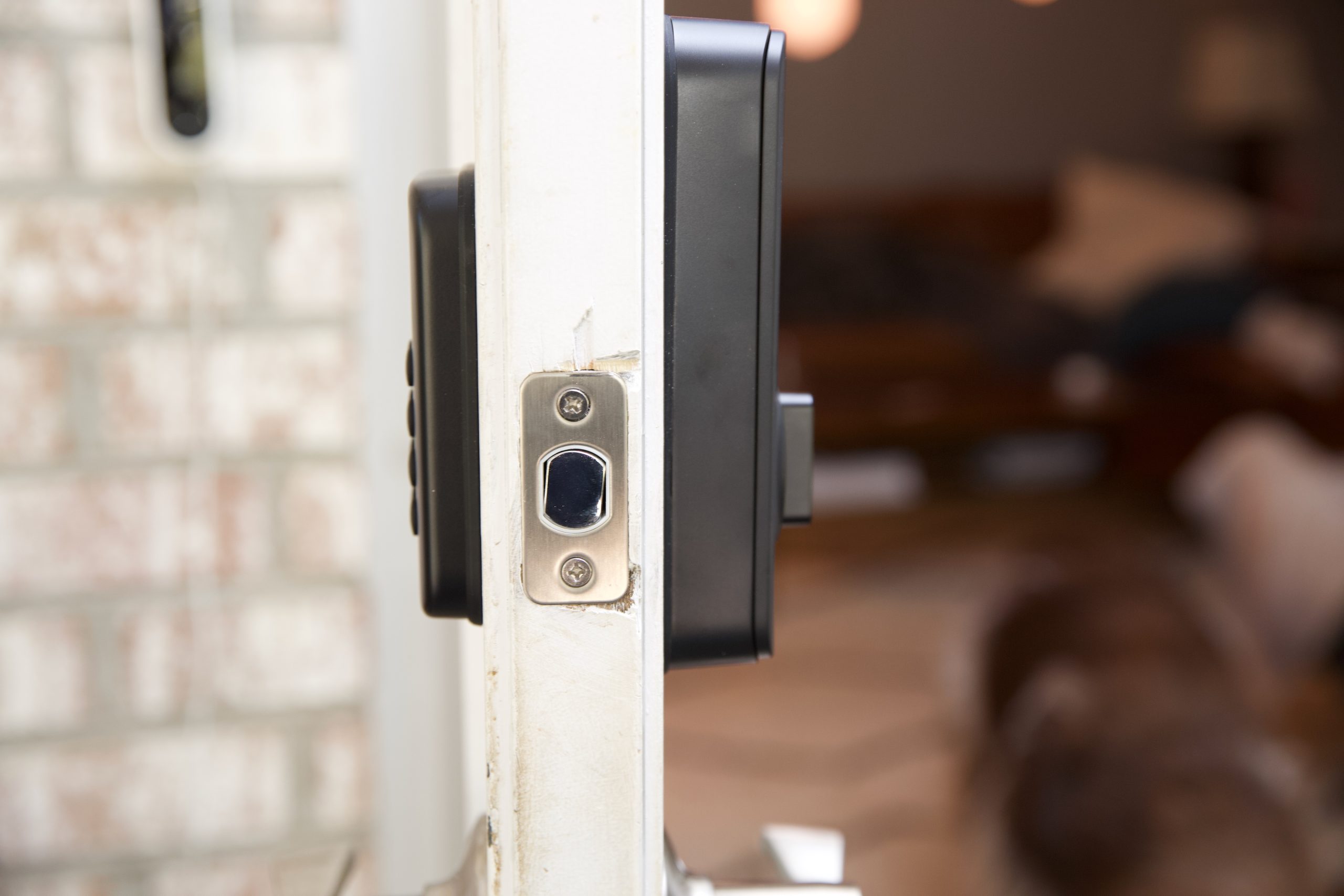
If you’re using a smart lock, here’s how to minimize the risks:
- Buy from established brands. August, Schlage, Yale. Not no-name brands with bad security reviews.
- Enable two-factor authentication. If your lock’s app supports it, turn it on.
- Keep firmware updated. Manufacturers push security patches. Install them.
- Use strong, unique codes. Not your birthday. Not 123456.
- Have a physical backup. Keep a key somewhere secure, not under the doormat.
- Consider your Wi-Fi router security. If your lock connects to Wi-Fi, your router is part of the chain.
- Look for ANSI/BHMA certification. Grade 1 is the highest security rating. If security is your priority, this matters.
The Bottom Line
Are smart locks safe? They’re as safe as traditional locks. Sometimes safer. Sometimes not. It depends on the model, the brand, and how you use it.
What they definitely are is more convenient. And that convenience factor makes people more likely to actually lock their doors.
One Reddit user put it perfectly:
<blockquote>. The problem is that they can be a bit finicky and require some maintenance.”
If a burglar with Lockpicking Lawyer skills targets your specific home, a smart lock might be exploited. But that’s not how most break-ins work.
Most break-ins are crimes of opportunity. Smart locks don’t make your home a target. They make it more convenient to manage.
Choose a reputable brand. Keep it updated. Use strong codes. And for heaven’s sake, don’t skip the physical backup key.