

Here’s the deal. You want a smart home. You don’t want to spend $500 getting there.
Fair.
Three brands keep coming up when you’re trying to spend as little as possible: IKEA, Philips Hue, and TP-Link. I’ve used all three. Here’s what nobody tells you plainly.
The Quick Version
Philips Hue wins on quality. IKEA wins on value. TP-Link wins on price if you just want basic on-off control.
That’s the headline. Keep reading if you want the nuance.
Budget Smart Home Comparison Table 2026
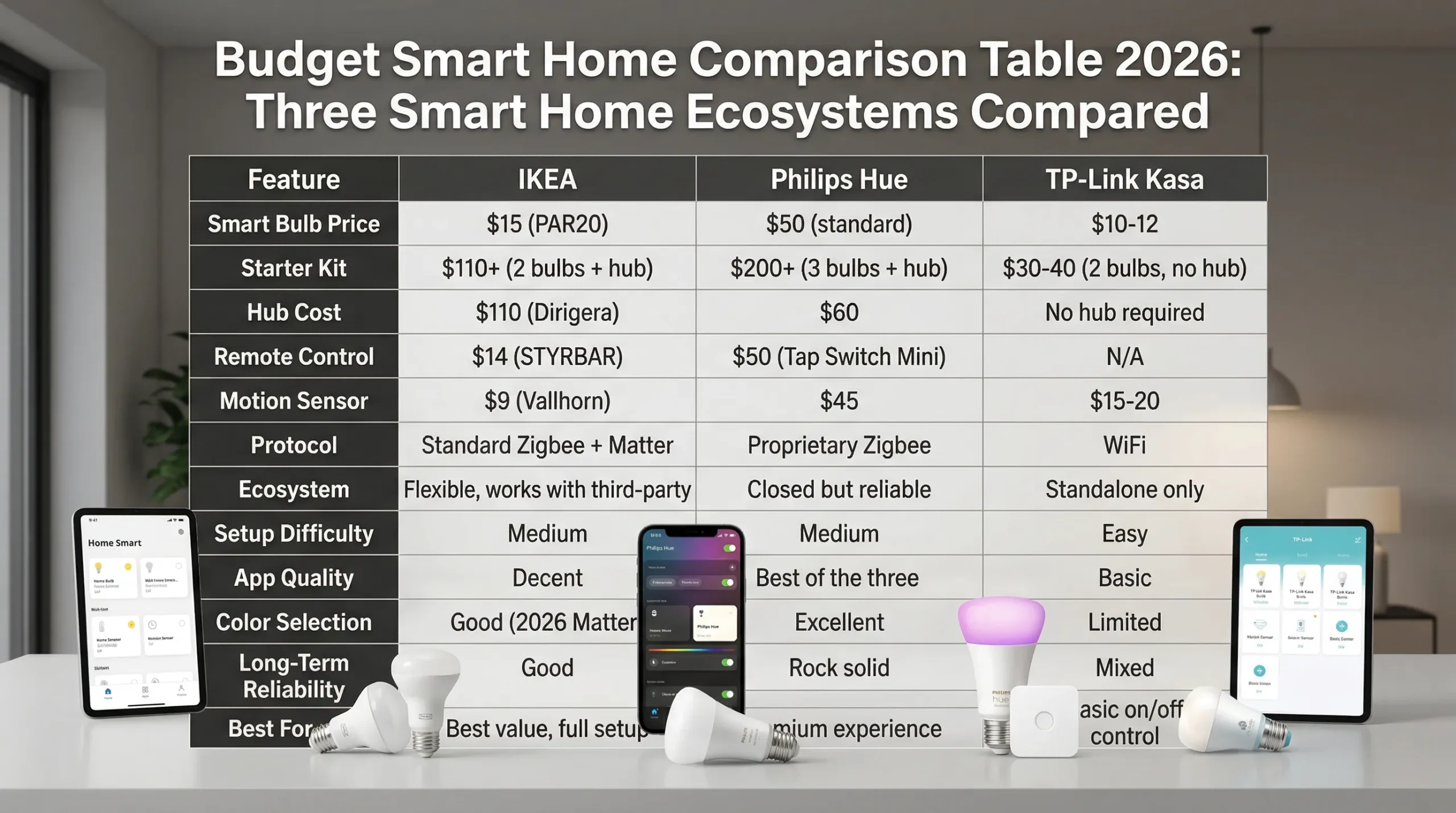
| Feature | IKEA | Philips Hue | TP-Link Kasa |
|---|---|---|---|
| Smart Bulb Price | $15 (PAR20) | $50 (standard) | $10-12 |
| Starter Kit | $110+ (2 bulbs + hub) | $200+ (3 bulbs + hub) | $30-40 (2 bulbs, no hub) |
| Hub Cost | $110 (Dirigera) | $60 | No hub required |
| Remote Control | $14 (STYRBAR) | $50 (Tap Switch Mini) | N/A |
| Motion Sensor | $9 (Vallhorn) | $45 | $15-20 |
| Protocol | Standard Zigbee + Matter | Proprietary Zigbee | WiFi |
| Ecosystem | Flexible, works with third-party | Closed but reliable | Standalone only |
| Setup Difficulty | Medium | Medium | Easy |
| App Quality | Decent | Best of the three | Basic |
| Color Selection | Good (2026 Matter) | Excellent | Limited |
| Long-Term Reliability | Good | Rock solid | Mixed |
| Best For | Best value, full setup | Premium experience | Basic on/off control |
Price Comparison: What You’re Actually Paying
Let’s be real about money. CNET reported that IKEA smart lights cost up to 80% less than Philips Hue. That’s not an exaggeration.
Here is what that looks like in practice.
A single Philips Hue bulb runs $50. An IKEA PAR20 smart bulb is around . For three bulbs in a room, you’re looking at $150 versus $45.
That’s before the hub.
Philips Hue’s hub is $60. IKEA’s Dirigera hub is $110. Yeah, counterintuitive.
But here’s the thing: IKEA’s hub only becomes essential when you want scheduling and remote access. With Philips Hue, you need the hub from day one. With IKEA, you can run a few bulbs on Bluetooth and add the hub later.
TP-Link’s smart bulbs are cheaper than both, usually in the $10 to $12 range. Their smart plugs are even better value. If all you want is “turn this thing on and off from my phone,” TP-Link wins on price every single time.
Smart Lighting: Where It Gets Real
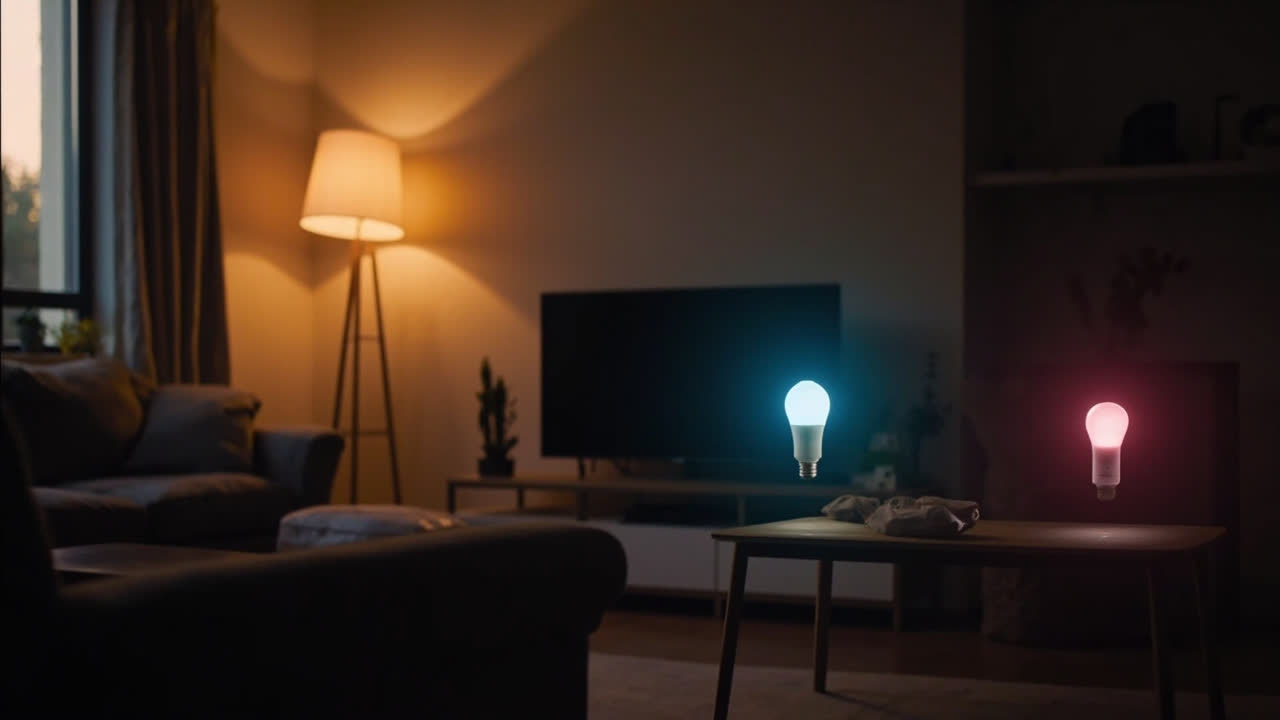
This is where the comparison matters most. Most people start with smart bulbs.
Philips Hue has the best selection. Whites, colors, outdoor-rated, strip lights, you name it. The app is reliable.
The color accuracy is good. They’ve been doing this long enough that everything just works.
IKEA’s selection has caught up. The 2026 Varmblixt line with Matter support is genuinely competitive.
The color quality is fine for most people. It won’t blow you away but it won’t disappoint either.
TP-Link’s Kasa bulbs are decent for the price. The app works. The color range is limited compared to Hue.
If you want premium features like ultra-precise color tuning, look elsewhere. If you just want your living room to be less bright at night, TP-Link handles it.
One thing nobody talks about enough. Philips Hue uses its own Zigbee ecosystem with a proprietary layer on top.
That means bulbs from other brands might not work seamlessly with your Hue hub. IKEA uses standard Zigbee, which plays nicer with third-party devices. TP-Link uses WiFi, which is simpler but can clutter your network.
Remotes and Sensors: The Hidden Cost
This is where IKEA absolutely crushes it.
A Philips Hue Tap Switch Mini costs $50. IKEA’s STYRBAR remote is $14. For motion sensors, Hue wants $45 for theirs.
IKEA’s Vallhorn sensor is $9. A contact sensor from Hue runs $40. IKEA’s Parasoll is $12.
That’s not a small difference when you’re outfitting a whole house. CNET notes that IKEA’s sensor prices beat most budget brands including Aqara and Sonoff.
The catch: IKEA’s remotes and sensors still need a hub for the full experience. But they also work without one for basic Zigbee pairing. You can connect up to 10 IKEA bulbs to a single remote with no hub at all.
Hubs and Ecosystem: The Foundation Question
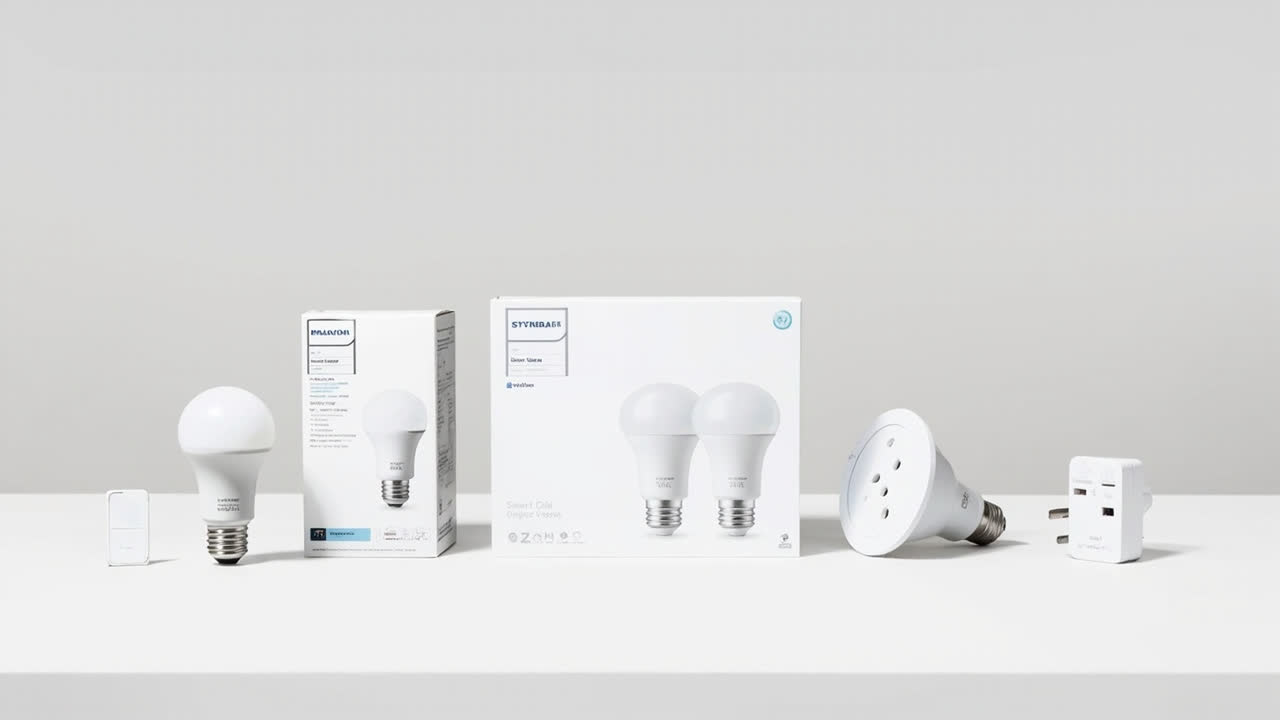
Philips Hue’s hub is $60. It’s stable, reliable, and well-supported. Works with Alexa, Google Home, Apple HomeKit. The app is solid.
IKEA’s Dirigera hub is $110 but the ecosystem is more flexible. Most IKEA devices use standard Zigbee, meaning they’ll work with third-party hubs if you decide to switch later. The 2026 Matter integration makes this even better.
TP-Link doesn’t really have a hub ecosystem. Their devices work through the Kasa app. If you want a unified smart home with devices from multiple brands, TP-Link isn’t the foundation you want.
Setup Difficulty: How Hard Is It Really
Here’s my honest take after setting up all three.
TP-Link is the easiest. Download Kasa, plug in the device, it shows up, you tap a few buttons. Done.
No hub needed. No configuration. If you’re not technically inclined, TP-Link is the path of least resistance.
IKEA takes more thought. You can start simple with Bluetooth, but the real power comes from the hub.
Setting up the Dirigera takes 20 minutes and requires connecting it to your router. The app is decent but not as polished as Hue’s.
Philips Hue is in the middle. The hub setup is straightforward. The app is the best of the three.
If you’re the type who reads instructions and follows them, Hue will feel painless. If you want to figure it out as you go, it might frustrate you on day one.
Long-Term Reliability
One Reddit user on r/tradfri described their IKEA setup working well for two years with minimal intervention. The Dirigera hub occasionally needs a restart but that’s true of every hub.
Philips Hue has a reputation for being rock solid. Hue users tend to set things up once and forget about them. That reputation is earned.
TP-Link devices have a mixed record over time. Some people report app authentication issues years in.
Others have zero problems. The quality control seems less consistent than the other two.
Which One Should You Actually Buy
It depends on what you’re trying to do.
Buy Philips Hue if: you want the most polished experience, you’re building a serious long-term smart home, and budget isn’t your primary concern. You’ll pay more upfront but the ecosystem is mature and reliable.
Buy IKEA if: you want the best value for a complete setup including sensors and remotes, you appreciate the local control and Matter flexibility, and you don’t mind spending a bit more time on setup. You’ll get 80% of Hue’s quality at 40% of the price.
Buy TP-Link if: you just want basic smart plugs or bulbs without complication, you’re not ready to commit to an ecosystem, and you want the lowest possible entry price. Don’t build a whole home on TP-Link but don’t dismiss it for simple standalone tasks.
The Honest Answer
If you’re starting from scratch and want the best balance of price and capability in 2026, IKEA is still the move. The 2026 Matter integration fixed most of the old complaints about compatibility. The price advantage on remotes and sensors alone justifies the choice.
Philips Hue is worth it if you’ve already decided you want a premium setup and you’re all-in on smart lighting. The premium in price is real but so is the premium in experience.
TP-Link fills a niche. It’s great for one or two devices. It falls apart when you try to build a real ecosystem.
Check IKEA’s full smart home range if you want to see current pricing and availability in your region.
—
Have a specific setup question? Drop it below.
