
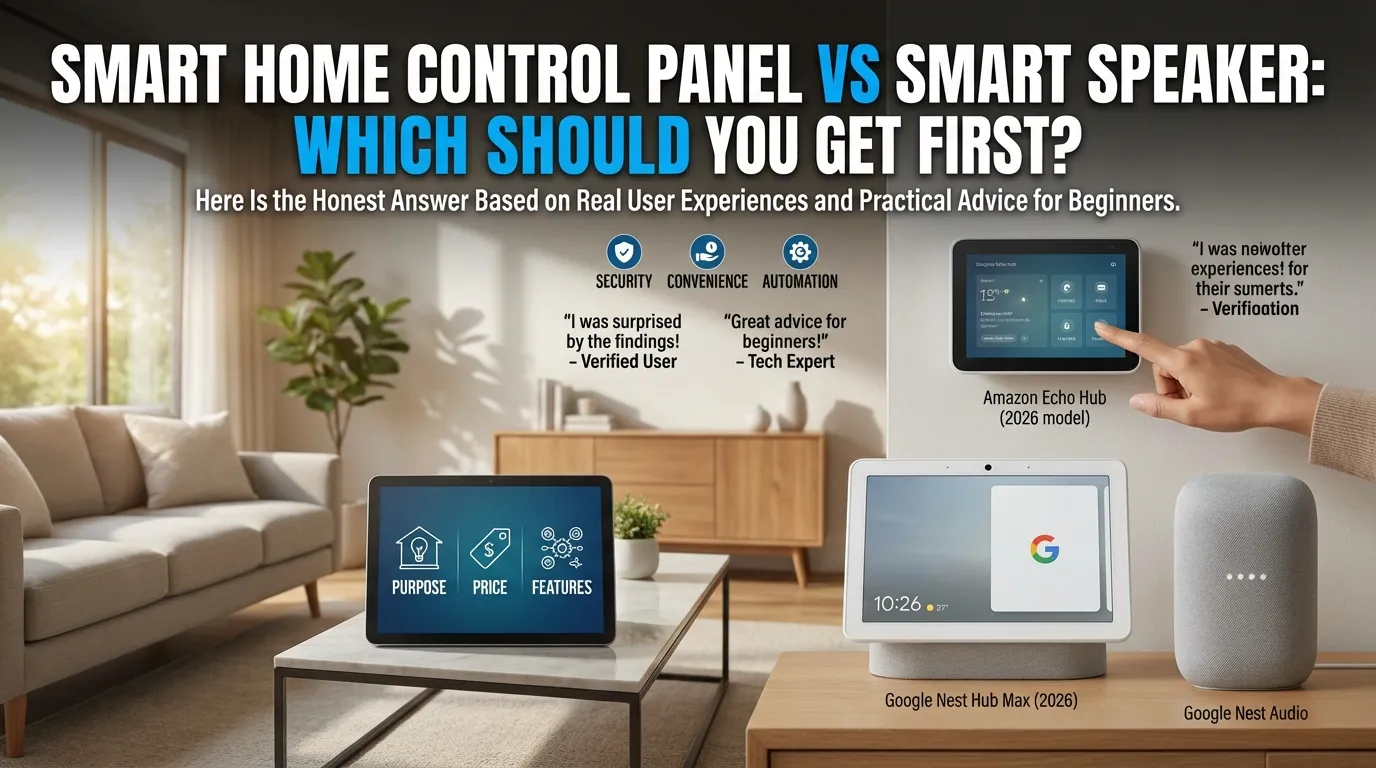
You just bought your first smart bulb. Now you are wondering what to get next.
A wall-mounted touch panel? A voice-controlled speaker? Or maybe both? This is the question smart home beginners ask most.
Users have been debating this exact thing. Some say a wall-mounted control panel changed how they use their home. Others say their Echo Dot does everything they need.
Here is the honest breakdown.
Key Differences at a Glance
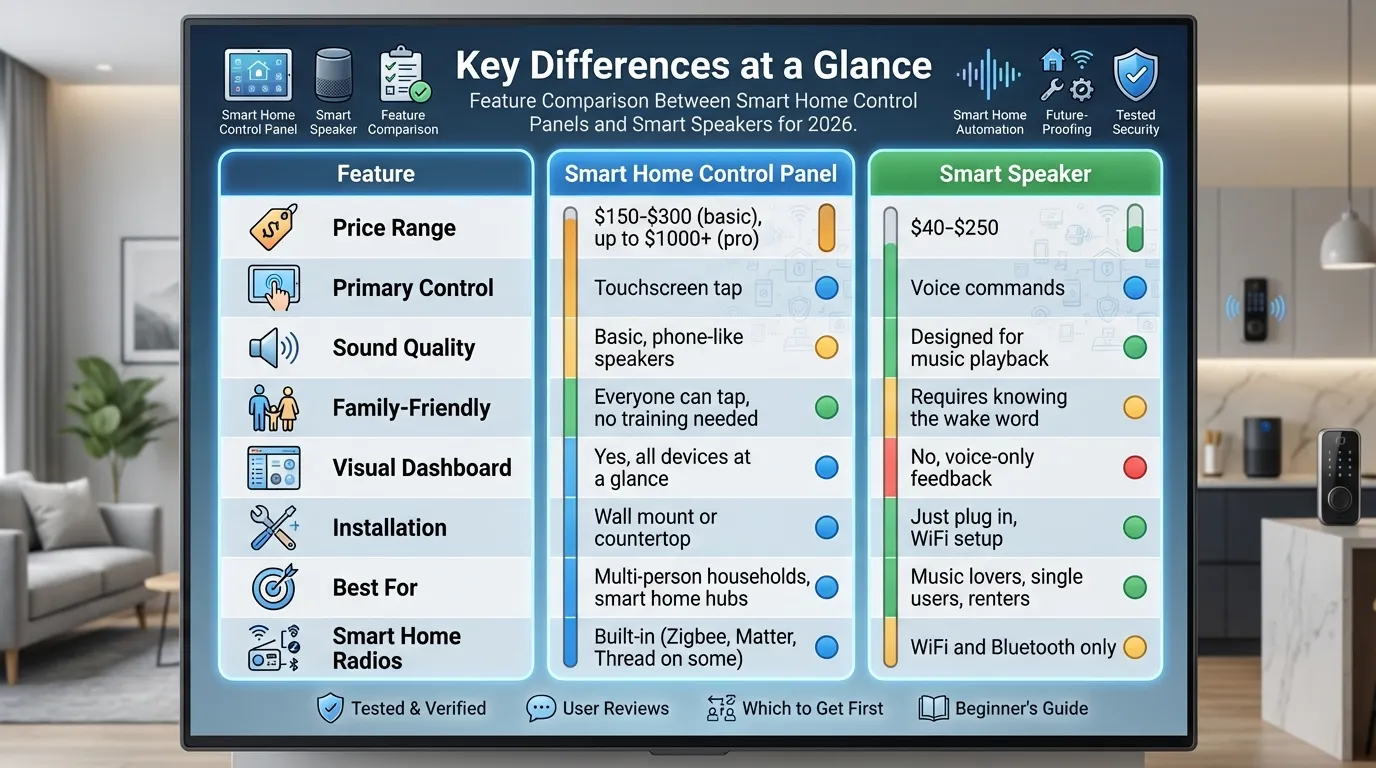
| Feature | Smart Home Control Panel | Smart Speaker |
|---|---|---|
| Price Range | $150-$300 (basic), up to $1000+ (pro) | $40-$250 |
| Primary Control | Touchscreen tap | Voice commands |
| Sound Quality | Basic, phone-like speakers | Designed for music playback |
| Family-Friendly | Everyone can tap, no training needed | Requires knowing the wake word |
| Visual Dashboard | Yes, all devices at a glance | No, voice-only feedback |
| Installation | Wall mount or countertop | Just plug in, WiFi setup |
| Best For | Multi-person households, smart home hubs | Music lovers, single users, renters |
| Smart Home Radios | Built-in (Zigbee, Matter, Thread on some) | WiFi and Bluetooth only |
What Are They?
A smart home control panel is a wall-mounted or tabletop touchscreen. It stays in one place. You tap icons to control lights, locks, the thermostat, and cameras. Think of it like a light switch that does everything.
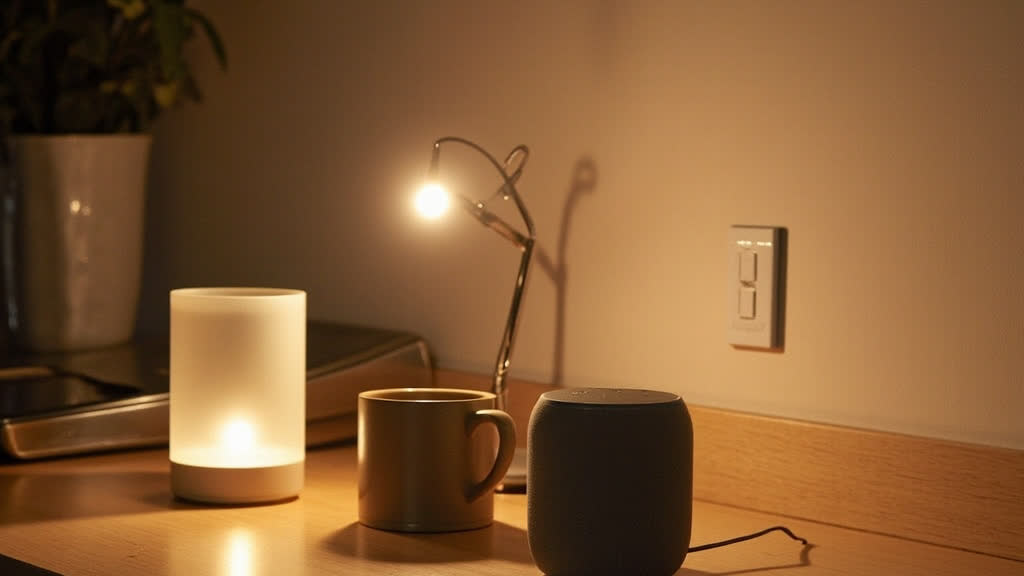
A smart speaker is a voice-first device. You talk to it. “Alexa, turn off the living room lights.” That is the whole interaction. No screen required.
TechRadar puts it simply:
smart speakers are for voice, smart displays add a screen on top. Both let you control your home, but the experience is completely different.
Sound Quality: The Speaker Wins
This is not even close. A dedicated smart speaker is built for music. A control panel with speakers sounds like a phone mounted on your wall. Fine for voice responses. Terrible for anything else.
One Reddit user put it bluntly:
they wanted a speaker that “actually sounds great” and found their smart display could not cut it for music. If you care about audio, a speaker comes first.
Smart Home Control: The Panel Wins
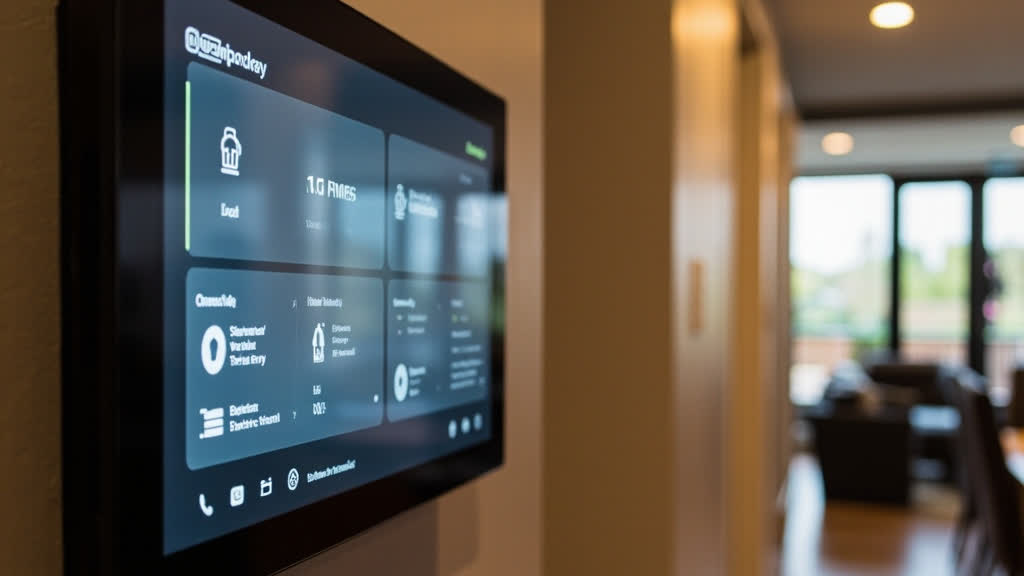
Here is where control panels dominate. When you have ten smart devices, scrolling through an app is slow. Voice commands are faster for simple things.
But what about your partner who does not know the wake word? What about your kids? A wall panel shows everything at a glance. No app. No voice. Just tap.
CNET calls smart displays “home control at a touch”. That is exactly right. When your hub is misbehaving and nothing responds to voice, you walk to the panel and fix it manually. That reliability matters.
One Home Assistant user described it well:
they wanted a “wired panel for the hallway and entry” that the whole family could use without training.
A speaker excludes everyone who is not comfortable talking to a device.
Price: What You Actually Spend
A solid control panel costs $150 to $300. The Echo Hub is $179. A high-end wall panel like Control4 runs into the thousands. For most people, you are looking at $150-250 for something decent.
A good smart speaker costs $50 to $200. The Echo Pop is $40. The Sonos Era 100 is $250. You can outfit your whole home for the price of one midrange control panel. The real cost is not the device. It is what you connect to it.
Use Case: Which Room?
Get a control panel first if:
- You have a household with non-tech-savvy people
- You want to control everything from one spot
- You prefer physical buttons over voice
- You already have many smart devices and want one dashboard
Get a smart speaker first if:
- You are just starting with 2-3 devices
- You want music and voice control together
- You are on a tight budget
- You rent and cannot mount things on the walls
The Practical Answer
Start with a smart speaker. Get one Echo Dot or Nest Mini for $40. Live with it for a month. See what frustrates you. Maybe voice is enough. Maybe you find yourself reaching for your phone to tap things manually. That frustration is your signal.
One Reddit user shared their own journey: they started with SmartThings and Google Home, then kept adding devices, eventually needing a hub because “WiFi-only was not cutting it.” That is the natural path most people follow.
If you already know you want a permanent setup for the whole family, skip the experiment. Get both. Put the panel where everyone walks by. Put speakers in rooms where you want music and casual voice control.
The Honest Truth
Most people do not need a control panel on day one. A $40 smart speaker will teach you more about your own habits than any review.
Do you actually talk to your devices? Do you remember the wake word? Those answers tell you whether a panel is worth the extra money.
Honestly, if you end up loving voice control and want it everywhere, you will probably end up buying both anyway.
